


- All
- Product Name
- Product Keyword
- Product Model
- Product Summary
- Product Description
- Multi Field Search


In utility-scale grid stabilization and heavy industrial applications, thermal management dictates the absolute performance limits of reactive power compensation devices. As project capacities scale into the hundreds of MVARs, traditional air-cooled systems face severe bottlenecks regarding footprint, acoustic noise, and semiconductor thermal degradation. These limitations directly threaten grid compliance and operational uptime. Transitioning to liquid cooling architectures addresses these constraints effectively. This guide evaluates the technical features, implementation realities, and procurement criteria for a high power water cooled STATCOM to assist engineering and procurement teams in vendor evaluation.
High power projects demand strict adherence to grid codes. You must provide continuous variable reactive power and respond rapidly to voltage sags. These operations create massive, bidirectional transient thermal stresses on switching semiconductors. The dual requirement to both generate and absorb reactive current generates intense heat. Managing this heat is critical for system survival. When you push hundreds of amps through an insulated-gate bipolar transistor, the junction temperature spikes within milliseconds. If you fail to extract that heat immediately, the silicon degrades, leading to catastrophic module failure and unplanned substation outages.
Forced-air cooling reaches physical and thermodynamic limits quickly. When applied to a high power static var generator, air cooling requires massive volumetric airflow. This introduces severe filter clogging risks and high acoustic emissions. Fans consume significant parasitic power and fail frequently under heavy loads. In a typical 100 MVAR installation, moving enough air to cool the thyristor or IGBT stacks requires industrial-grade blowers that sound like jet engines. You also have to deal with the reality of airborne contaminants. Even with heavy filtration, dust and particulate matter eventually bypass the screens, coating the heat sinks and insulating the very components you are trying to cool.
Thermal density becomes a critical failure point in medium voltage STATCOM applications. High current switching generates highly concentrated heat at the IGBT level. Air cannot remove this localized heat fast enough. This leads to thermal cycling fatigue and premature module failure. Every time the load fluctuates, the semiconductor expands and contracts microscopically. Over thousands of cycles, this mechanical stress fractures the solder joints. Liquid cooling flattens this thermal curve, keeping the baseplate temperature stable regardless of the electrical load.
| Cooling Medium | Specific Heat Capacity (J/kg·K) | Thermal Conductivity (W/m·K) | Practical Heat Removal Limit (kW/m²) |
|---|---|---|---|
| Forced Air | 1005 | 0.026 | ~3 - 5 |
| Deionized Water | 4182 | 0.600 | ~50 - 100 |
| Water/Glycol (50/50) | 3300 | 0.400 | ~35 - 70 |
A closed-loop deionized water system forms the primary cooling circuit. Coolant circulates directly through heat sinks attached to semiconductor modules. Deionized water is absolutely necessary to prevent electrical arcing across high-voltage components. Glycol mixtures are added to protect the system in specific ambient conditions. The primary loop operates under strict pressure and flow parameters. You typically see flow rates ranging from 200 to 800 liters per minute, depending on the MVAR rating. The water passes through micro-channel cold plates bolted directly to the IGBT modules, absorbing the heat at the source before routing it to the main heat exchanger.
Reliability requires robust mechanical design. Standard specifications demand 100% redundant pump configurations. You will typically see N+1 or 2N setups. Automated pump failover protocols maintain uninterrupted coolant circulation if a primary pump fails. This prevents sudden thermal trips during critical grid events. The failover sequence must execute flawlessly:
Modern systems incorporate dedicated pre-charging units. These units facilitate a controlled soft-start sequence. This eliminates destructive inrush currents during initial grid connection. Protecting the system from electrical stress extends the lifespan of both the STATCOM and adjacent substation equipment. Without a pre-charge circuit, closing the main breaker into a massive bank of uncharged DC link capacitors acts like a dead short on the grid. The resulting current spike can trip upstream protection relays and physically damage the capacitor busbars.
Advanced heat exchanger configurations manage the secondary loop. You can choose between water-to-water and water-to-air designs. Secondary loops isolate the highly purified primary coolant from external environmental factors. This prevents contamination and simplifies external maintenance procedures. If your facility has access to a raw cooling water supply, a water-to-water plate heat exchanger offers the most compact footprint. If you are operating in a remote substation, a water-to-air dry cooler mounted on the roof or adjacent pad will reject the heat into the atmosphere.
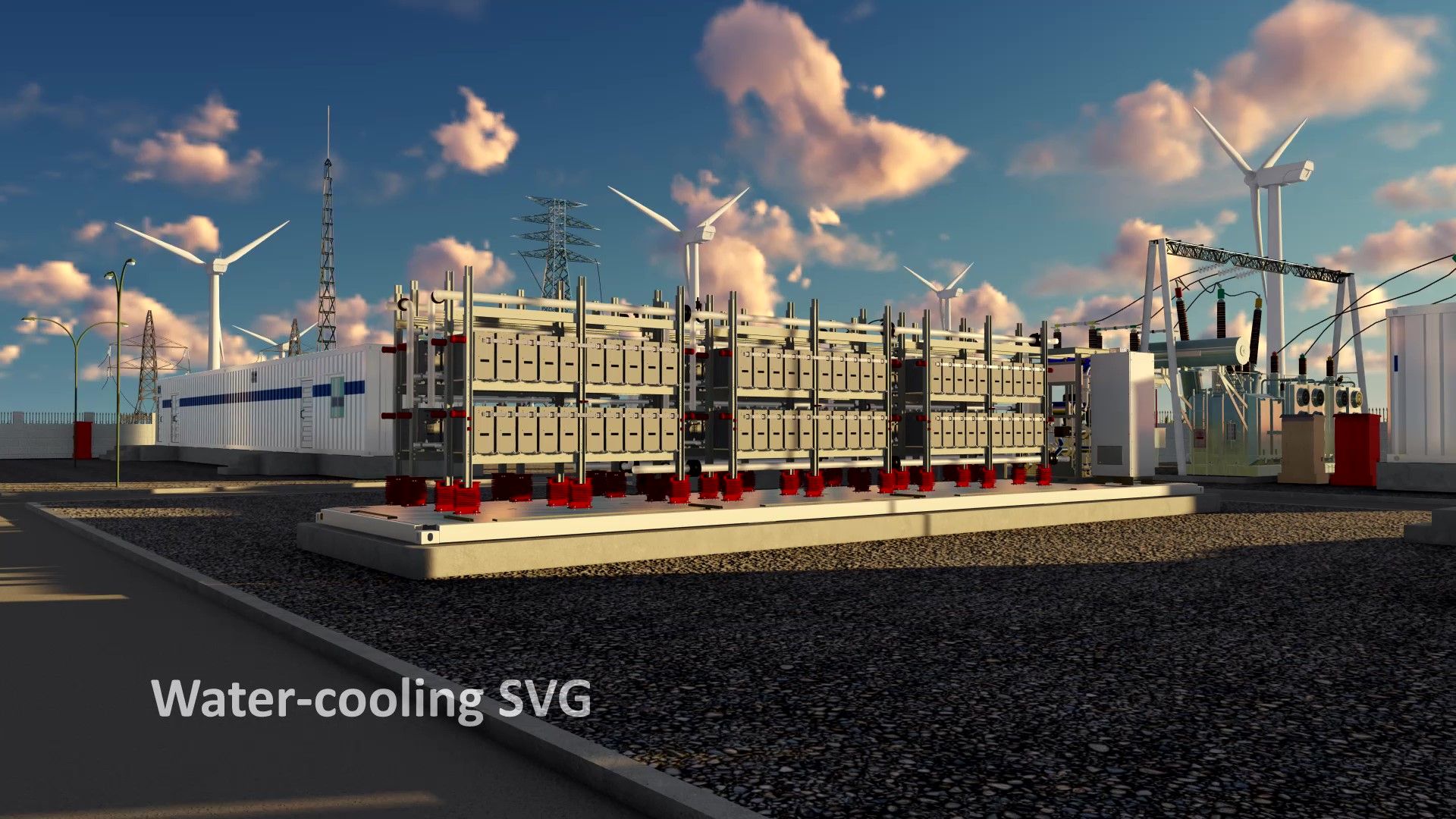
Maintaining lower IGBT junction temperatures directly improves outcomes. It reduces thermal cycling fatigue and minimizes semiconductor degradation. This extends the overall asset lifespan significantly. Water cooling achieves this thermal stability far better than forced air. When you keep the junction temperature below 85 degrees Celsius, the failure rate of power electronics drops exponentially. Air-cooled systems often push the silicon to 110 degrees or higher during peak reactive power demands, eating into the operational safety margin.
Liquid cooling drastically reduces the required physical footprint. You can achieve up to a 60% reduction in square footage. This is critical for offshore wind platforms, underground mining operations, or dense urban substations. Space constraints often dictate the cooling architecture choice. Real estate inside a prefabricated substation building is expensive. By shrinking the converter cabinets, you reduce the overall dimensions of the E-house, cutting down on structural steel, foundation work, and shipping logistics.
Acoustic profiles differ vastly between the two methods. Replacing massive high-velocity cooling fans with enclosed pump systems lowers decibel output. This matters heavily in residential areas or noise-restricted industrial zones. A large air-cooled STATCOM can easily exceed 85 dB(A) at a distance of one meter. A water-cooled equivalent, assuming the secondary dry cooler is located remotely or utilizes low-speed fans, can operate below 70 dB(A). This 15-decibel reduction often eliminates the need for expensive acoustic barrier walls.
| Evaluation Metric | Air-Cooled Architecture | Water-Cooled Architecture |
|---|---|---|
| Power Density (MVAR/m²) | Low (Requires extensive cabinet spacing) | High (Compact, dense module stacking) |
| Acoustic Emissions | High (80 - 90+ dB(A)) | Low (65 - 75 dB(A)) |
| Environmental Sensitivity | High (Vulnerable to dust, salt, humidity) | Low (Sealed IP54/NEMA 12 cabinets) |
| Maintenance Focus | Filter replacement, fan bearing checks | Resin replacement, pump seal inspection |
Deploying equipment outside requires robust environmental enclosures. You must meet strict IP or NEMA rating requirements. These housings protect sensitive power electronics and cooling manifolds from dust, rain, and corrosive elements. Proper sealing prevents catastrophic environmental ingress. For an outdoor installation, you generally specify NEMA 3R or NEMA 4X enclosures. The cabinet doors must feature heavy-duty gaskets and multi-point latching systems to withstand wind-driven rain and snow.
Freeze protection is vital for an outdoor water cooled STATCOM. You must calculate specific glycol-to-water ratios for winterization. Conversely, extreme summer ambient temperatures impact the sizing of secondary air-blast coolers. The heat exchanger must dissipate maximum thermal loads during peak summer days. If the site experiences ambient temperatures down to -30 degrees Celsius, you need a 50/50 mixture of ethylene or propylene glycol in the secondary loop. The primary loop, which remains indoors or inside a heated enclosure, stays pure deionized water to maintain dielectric strength.
Condensation management prevents internal water damage. Cold coolant pipes will sweat in humid environments. You must integrate internal HVAC or desiccant systems. These systems control internal humidity and prevent condensation from dripping onto high-voltage electronics. We typically install cabinet heaters controlled by a dew point sensor. If the internal temperature drops too close to the dew point, the heaters engage to warm the air and lower the relative humidity, keeping the pipe surfaces dry.
Engineering teams must evaluate customization versus standardization. Modular, containerized units offer rapid deployment. Custom-built, site-specific installations optimize space and integration. Choosing the right path establishes a viable water cooled STATCOM design solution for your specific plant layout. Containerized systems arrive pre-piped and pre-tested, drastically reducing site labor. You simply land the ISO container on a concrete pad, connect the medium voltage cables, and pipe in the secondary cooling loop.
Piping and material selection demand rigorous scrutiny. You must use corrosion-resistant materials throughout the primary loop. Specific grades of stainless steel and specialized polymers are mandatory. This prevents coolant contamination and maintains the ultra-pure water quality required for high-voltage isolation. Standard carbon steel or copper piping will leach ions into the water, destroying its dielectric properties. We strictly specify 316L stainless steel for all manifolds and PTFE or EPDM hoses for the flexible connections to the power modules.
Integration with plant control systems is non-negotiable. You must route telemetry data to the facility's SCADA or DCS. Critical metrics include flow rates, pressure drops, coolant temperature, and conductivity levels. Standard protocols like IEC 61850 or Modbus TCP facilitate this seamless data transfer. Operators need real-time visibility into the cooling system's health. A slow rise in coolant conductivity or a gradual drop in pump discharge pressure serves as an early warning sign, allowing maintenance teams to intervene weeks before a hard fault trips the system offline.
Coolant conductivity spikes present a severe risk. Increased conductivity leads to catastrophic electrical faults and flashovers. You mitigate this using continuous inline conductivity sensors. These sensors pair with automated ion-exchange resin beds to maintain ultra-low microsiemens levels continuously. The target conductivity for a high-voltage primary loop is typically below 0.5 µS/cm. A small bypass line constantly routes a fraction of the coolant through a mixed-bed resin cylinder, stripping away any stray metal ions or impurities that enter the fluid.
Physical coolant leaks can destroy power modules instantly. You must implement zoned leak detection cables across the cabinet floors. Compartmentalized cabinet designs isolate potential spills. Automated isolation valves shut down specific cooling branches before widespread damage occurs. We route the leak detection tape directly beneath the hose connections and manifold joints. If a drop of water hits the tape, the control system instantly trips the main breaker, shuts down the circulation pumps, and closes the isolation valves to contain the fluid.
Maintenance burdens increase with mechanical complexity. Water systems require different skill sets than air-cooled units. You must establish strict preventative maintenance schedules. Routine tasks include inspecting pump seals, replacing resin cartridges, and conducting laboratory coolant quality sampling. You cannot treat a liquid-cooled power converter like a passive transformer. It requires active mechanical oversight. Facility managers must train their technicians on proper fluid handling procedures, system venting, and pump alignment techniques.
Proven field experience separates reliable vendors from novices. Buyers must demand verifiable case studies. Look for high-power deployments operating continuously for over five years. Theoretical designs do not survive harsh grid realities. When evaluating proposals, ask for reference sites with similar environmental conditions and MVAR ratings. Call the plant managers at those sites and ask them directly about pump reliability, leak incidents, and the vendor's response time to warranty claims.
Technical benchmarking requires deep engineering reviews. You must evaluate a water cooled STATCOM manufacturer on their proprietary leak-prevention technologies. Scrutinize their built-in redundancy configurations. Ensure their pump failover logic is tested and proven. Review the piping and instrumentation diagrams (P&ID) carefully. Look for proper placement of expansion tanks, air bleed valves, and pressure relief mechanisms. A poorly designed hydraulic circuit will suffer from cavitation and air locks, leading to localized overheating.
Testing and validation capabilities are critical procurement gates. Demand full-load, full-voltage factory acceptance testing (FAT). The facility must be capable of stressing the thermal management system to its limits prior to site delivery. Never accept partial-load FAT for liquid-cooled systems. The manufacturer must prove that the heat exchangers can reject the maximum thermal load while the STATCOM operates at its absolute current limit. This requires a massive test bay equipped with multi-megawatt load banks and grid simulators.
Lifecycle support dictates long-term success. Evaluate the manufacturer's supply chain resilience. They must provide rapid deployment of proprietary cooling components and pump spares. Access to specialized maintenance personnel ensures your system recovers quickly from any mechanical faults. Ensure the vendor maintains a domestic inventory of critical spare parts, including pre-charged resin tanks, replacement IGBT cold plates, and primary circulation pumps.
A: Water provides roughly four times the heat capacity of air. This allows for superior thermal transfer, keeping semiconductor modules at optimal temperatures, preventing thermal cycling fatigue, and significantly extending their operational lifespan under heavy loads.
A: Liquid cooling drastically reduces the required physical footprint, often by up to 60%. This makes it ideal for space-constrained environments like offshore platforms, underground mines, or dense urban substations where real estate is limited.
A: The primary loop uses highly purified, deionized water to prevent electrical arcing across high-voltage components. Glycol mixtures are often added to the secondary loop to protect against freezing in specific ambient conditions.
A: Manufacturers use deionized water to eliminate electrical conductivity. They also integrate continuous inline conductivity sensors and automated ion-exchange resin beds to maintain ultra-low microsiemens levels and ensure water purity.
A: A pre-charging unit facilitates a controlled soft-start sequence. This eliminates destructive inrush currents during initial grid connection, protecting the system and adjacent substation equipment from severe electrical stress.
A: Yes. Outdoor units utilize specific glycol-to-water ratios in the secondary loop for winterization and employ environmental enclosures with internal climate control to prevent freezing and condensation on the primary loop.


