


- All
- Product Name
- Product Keyword
- Product Model
- Product Summary
- Product Description
- Multi Field Search


Ever wonder why your electricity bill is higher than expected despite normal usage? The answer often lies in "hidden" energy known as reactive power. Reactive Power Compensation is the essential process used to balance this energy and optimize grid performance. In this post, you will learn how this technology improves efficiency and cuts costs.
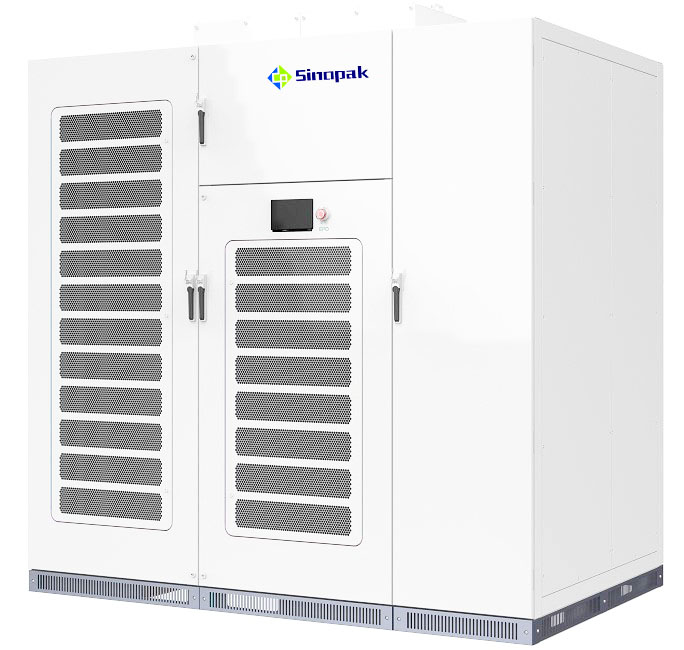
● Core Function: Reactive Power Compensation balances the phase shift between voltage and current to improve power quality and system efficiency.
● Efficiency and Savings: It significantly reduces energy losses in transmission and helps businesses avoid utility penalties by maintaining a high power factor.
● Grid Stability: The technology is essential for stabilizing voltage levels and protecting sensitive equipment from fluctuations and harmonic distortion.
● Renewable Integration: Modern solar inverters now incorporate reactive power control to manage the impact of residential and industrial solar systems on the utility grid.
● Technological Options: Solutions range from traditional, cost-effective capacitor banks for stable loads to advanced STATCOMs and SVCs for rapid, dynamic response in complex environments.
At its core, Reactive Power Compensation manages how energy oscillates between the source and the load. It is an essential mechanism for modern electrical infrastructure.
In a perfect AC world, voltage and current peaks would happen at the same time. However, certain electrical components cause one to lag behind the other. This delay is known as a phase shift. When this shift occurs, the system becomes less efficient because it must carry extra current to deliver the same amount of actual work.
Most industrial equipment, like motors and transformers, are "inductive" loads. They cause the current to lag behind the voltage. Conversely, "capacitive" loads—often found in long cable networks or specific electronic devices—cause the current to lead the voltage. Compensation works by using one to cancel out the effects of the other.
It is easy to dismiss reactive power because it doesn't perform "useful work". However, it is fundamentally necessary for maintaining the magnetic and electric fields in AC equipment like refrigerators, air conditioners, and industrial machinery. Without it, these motors simply wouldn't turn.
Compensation systems function by injecting or absorbing reactive power exactly when needed. By installing devices like capacitor banks or static compensators in parallel with the load, they can automatically adjust their output to balance the system's demand.
When you reduce the reactive power demand, you lower the total Apparent Power. This is like shrinking the "foam" in the beer glass so you can fit more "liquid" (active power) into the same infrastructure. This effectively increases the capacity of your existing transformers and cables.
The Power Factor is the ratio of active power to apparent power ($PF = P / S$). It is a score of how effectively you use electricity. A PF of 1.0 is perfect, while a low PF indicates inefficient usage that leads to higher losses and potential equipment damage.
Fixed compensation is a "set it and forget it" approach, ideal for loads that never change. Automatic regulation, however, uses sophisticated controllers to monitor the grid and switch compensation levels in real-time, which is necessary for modern facilities with fluctuating demands.
Implementing Reactive Power Compensation isn't just a technical preference; it's a strategic business decision that impacts the bottom line and equipment longevity.
Many utility companies enforce a minimum power factor requirement. If your facility falls below this standard, they often apply steep penalties or extra charges to your bill. Compensation helps you avoid these unnecessary costs.
Poor power factors cause increased current flow through your internal wires. Because heat loss is proportional to the square of the current ($I^2R$), even a small reduction in current can lead to significant energy savings and cooler-running equipment.
Reactive power management stabilizes voltage levels. This prevents the "dips" and "swells" that can cause sensitive electronics to malfunction or lead to the premature failure of expensive industrial machinery.
As power grids become more crowded, local governments and suppliers are tightening regulations. Compliance is no longer optional for many grid-tied systems, especially those incorporating renewable energy.
Choosing the right technology depends on the speed of your load changes and your budget.
Capacitor banks are the most common and cost-effective solution. They are simple, reliable, and require minimal maintenance. While they lack a high-speed dynamic response, they are perfect for industrial settings where loads are relatively stable.
SVCs combine the benefits of traditional capacitors with high-speed power electronics. They provide rapid, continuous regulation, making them ideal for demanding environments like steel mills or large-scale industrial plants.
STATCOM technology represents the cutting edge of Reactive Power Compensation. These devices use advanced electronics to provide instant, step-less compensation. They offer superior performance in critical applications, though they generally involve higher initial investment.
Technology | Response Speed | Maintenance | Relative Cost | Best Use Case |
Capacitor Banks | Slow (Steps) | Low | Low | Stable industrial loads |
SVC | Fast | Medium | Medium | Large industrial plants |
STATCOM | Instant | Medium | High | Solar farms & critical grids |
Renewable energy adds a new layer of complexity to power quality. Solar systems, in particular, require careful reactive power management.
When a solar system exports active power to the grid, it can inadvertently cause the local power factor to drop. This is because the grid is still providing the reactive power for the building's motors, but the "active" portion from the utility has decreased.
Modern solar inverters are no longer just for converting DC to AC. They now include "smart" features that allow them to absorb or inject reactive power to meet grid standards.
In residential and commercial solar setups, multiple inductive devices (like AC units) can strain the system. Advanced inverters can be configured with fixed or dynamic ratios to stabilize these specific environments.
Consider the SOLXPOW inverter system as an example. It allows users to configure a reactive power ratio—ranging from 60% capacitive to -60% inductive—to ensure the system remains in total compliance with varying local grid codes.
To fix a power factor issue, you first need to understand the numbers.
Most facilities aim for a power factor between 0.95 and 1.0. Setting this target is the first step in calculating how much compensation hardware you need to install.
You must measure your peak Active Power ($P$) and your current Apparent Power ($S$). These figures are typically found on your utility bill or via a power quality analyzer.
The difference between your current state and your target state tells you the required "kVAR" (kilovolt-ampere reactive) of the compensation device.
● Formula: $Q_{required} = P \times (\tan(\phi_1) - \tan(\phi_2))$
● Note: This formula calculates the reactive power needed to move from the current phase angle ($\phi_1$) to the target angle ($\phi_2$).
Every industry has different needs when it comes to Reactive Power Compensation.
The industrial sector is the largest consumer of reactive power. Large motors and arc furnaces create massive, sudden demands that require comprehensive compensation solutions to maintain quality.
Commercial buildings face fluctuating demands throughout the day. Modern systems help maintain stability across HVAC and office equipment, ensuring smooth operation while lowering overhead costs.
Power distribution networks use VAR compensation systems to manage the increasing demands of renewable energy and to reduce losses across miles of transmission lines.
When choosing a provider, look for advanced features that offer long-term flexibility.
Modern controllers use Fast Fourier Transform (FFT) analysis. This technology allows for precise calculations even in "noisy" environments with high harmonic distortion.
Ease of use is critical. Look for systems with large-scale LCD interfaces that provide clear visual feedback, making it easy for on-site staff to monitor performance in real-time.
In the era of the Industrial Internet of Things (IIoT), your compensation system must talk to your other equipment. Standard RS485 communication interfaces allow for seamless integration into existing control systems.
Reactive Power Compensation is now a vital strategy for improving energy efficiency and achieving cost savings. As renewable energy grows, balancing our power with advanced technologies becomes even more essential. Zhuhai Sinopak Electric Ltd offers industry-leading solutions that ensure grid compliance and long-term reliability. By investing in these smart tools, businesses can finally secure a more stable and cost-effective electrical future.
A: It balances energy flow by providing or absorbing reactive power, which improves system efficiency and reduces energy losses.
A: Solar power affects grid stability; using an inverter for Reactive Power Compensation ensures compliance with local utility regulations and avoids penalties.
A: It improves the power factor, helping facilities avoid extra charges and reducing the current flow that causes line losses.


