


- All
- Product Name
- Product Keyword
- Product Model
- Product Summary
- Product Description
- Multi Field Search


The key features of a high-performance indoor water cooled STATCOM are its advanced power electronic topology, a meticulously engineered closed-loop cooling system, and an intelligent control system that together ensure reliable, efficient, and stable dynamic reactive power compensation in a compact footprint.
Selecting the right Water Cooled STATCOM for an indoor installation is a critical decision that impacts grid stability, power quality, and operational costs. Unlike outdoor or air-cooled alternatives, an indoor system presents unique challenges and requirements centered on space efficiency, thermal management, and reliability. This guide provides a detailed analysis of the essential features engineers, project developers, and plant managers must evaluate to ensure optimal performance and return on investment from their STATCOM system.
A Static Synchronous Compensator (STATCOM) is a cornerstone of modern power systems, providing dynamic reactive power compensation to maintain voltage stability, improve power quality, and ensure grid code compliance. Its ability to inject or absorb reactive power almost instantaneously makes it indispensable for applications with fluctuating loads or intermittent generation, such as renewable energy plants and industrial facilities.
The water cooled variant represents the high-end of STATCOM technology, designed for high power density and maximum efficiency. Water's superior heat capacity allows for a much more compact design compared to air-cooled systems, as it removes heat from insulated-gate bipolar transistor (IGBT) modules more effectively. This compactness is paramount for indoor installations where floor space is at a premium. Furthermore, a well-designed closed-loop cooling system isolates sensitive electronics from corrosive or dusty environments, significantly enhancing system reliability and longevity. For these reasons, major utility-scale projects, such as the world-record ±300 Mvar system in China, consistently employ containerized water cooled STATCOM designs.
The underlying electrical topology defines the STATCOM's fundamental capabilities, efficiency, and physical layout. For indoor water cooled units, the choice of topology is intrinsically linked to achieving a compact, serviceable, and high-performance system.
Module-Multilevel Converter (MMC) Topology: This is increasingly considered the state-of-the-art for high-power applications. Its modular design uses identical submodules, enabling scalable power ratings and simplifying maintenance. A key advantage for indoor use is its ability to generate high-quality voltage waveforms with minimal filtering, reducing the need for bulky passive components and saving space.
Cascaded H-Bridge (CHB) Topology: Also known as the chain-link design, this topology is another leading choice for high-voltage STATCOMs. Like the MMC, it offers modularity and excellent output waveform quality. It is particularly noted for its ability to connect directly to medium-voltage grids (e.g., 35kV) without a step-up transformer, eliminating a major source of loss and space consumption.
Transformerless Design Capability: Both MMC and advanced CHB topologies can facilitate a direct grid connection at medium voltage levels. Eliminating the bulky line-frequency transformer is a transformative advantage for indoor spaces, dramatically reducing the system's footprint, weight, and total losses.
Table 1: Comparison of STATCOM Topologies for Indoor Application
The water cooling system is not an accessory but the critical enabler of the STATCOM's high performance. A robust design ensures the IGBTs operate within their optimal temperature range, maximizing efficiency and service life.
Closed-Loop Deionized Water Circuit: The primary cooling loop must use deionized water. High-purity water with very low electrical conductivity is essential to prevent leakage currents and electrical short circuits within the cooling plates attached to high-voltage components. This loop includes pumps, cold plates, and a heat exchanger.
Redundancy and Reliability: Critical components like pumps and control power supplies should be configured in a redundant (N+1) arrangement. This ensures that a single point of failure does not lead to a system shutdown, a crucial feature for mission-critical voltage stability support.
Intelligent Temperature Control: Advanced systems use variable-speed drives on pumps and fans coupled with control algorithms to precisely manage coolant temperature. This minimizes energy consumption by the cooling system itself and ensures stable thermal conditions under all load scenarios.
Monitoring and Diagnostics: A comprehensive sensor suite should monitor flow rates, inlet/outlet temperatures, pressure, and water conductivity. Real-time data should feed into the main STATCOM controller, providing alerts for preventative maintenance and protecting the power stack from damage due to cooling faults.
The intelligence of the STATCOM resides in its control and protection system. For seamless indoor operation and grid support, these features are non-negotiable.
Fast Dynamic Response: A primary reason for choosing a STATCOM over traditional compensators is its speed. Look for systems capable of full reactive power response within one to two cycles of the power frequency. This is vital for suppressing voltage flicker from industrial loads or stabilizing the grid during faults.
Advanced Grid Support Functions: Modern STATCOMs must go beyond basic power factor correction. Essential functions include: voltage regulation (automatic or set-point), low-voltage ride-through (LVRT) and high-voltage ride-through (HVRT) capabilities to support grid recovery during disturbances, and inertial emulation or fast frequency response in some advanced designs.
Comprehensive Protection Schemes: The system must have integrated protection for itself and the grid. This includes overcurrent, overvoltage, and overtemperature protection for the IGBTs, as well as detection for cooling system failures, grounding faults, and harmonic instability.
User Interface and Connectivity: An intuitive human-machine interface (HMI) for local control and extensive remote monitoring capabilities via standard protocols (IEC 61850, DNP3, Modbus) are essential for integration into modern plant or utility SCADA systems.
Specifying the technical features is only part of the process. Successful indoor deployment hinges on several practical factors.
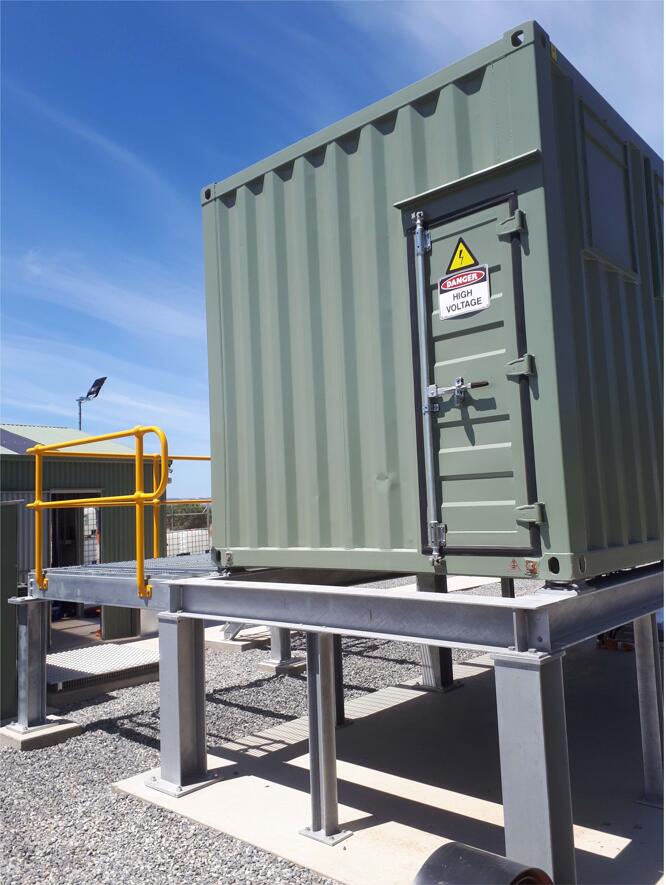
Footprint and Layout: Prefabricated, containerized solutions are highly effective for indoor use. They arrive pre-tested, minimize on-site installation time, and simplify placement within a building or substation. Ensure there is adequate space for service access around the cabinet or container.
Acoustic Noise: Water cooled systems are generally quieter than air-cooled ones, as they use smaller, slower fans on the secondary side (air-cooled heat exchangers). Nevertheless, specify maximum noise level requirements (in dB) to ensure a suitable working environment.
Auxiliary Power and Water Connections: Plan for the utility connections. The cooling system itself requires a reliable auxiliary power source. If using an external water supply for a secondary cooling loop (e.g., city water or cooling tower loop), water quality and pressure specifications must be agreed upon.
Serviceability and Maintenance: Modular design extends beyond electronics to the cooling system. Look for components that are easy to access and replace, such as pump modules and filter cartridges. Clear maintenance schedules and remote diagnostic tools greatly reduce lifecycle costs.
The STATCOM market is evolving. When making a selection, consider features that align with future grid needs.
Hybrid Compensation Capability: Some systems can integrate switched passive components (capacitors or reactors) to form a hybrid static compensator. This optimizes cost-efficiency by using the fast STATCOM for dynamic changes and cheaper passive banks for steady-state reactive power needs.
Advanced Grid-Forming Controls: As power systems rely more on inverter-based resources, STATCOMs with grid-forming controls can provide virtual inertia and strengthen grid stability in novel ways.
Emphasis on Cybersecurity: With increased connectivity, robust cybersecurity for the control system is moving from a best practice to a mandatory requirement, especially for grid-connected assets.
Selecting an indoor Water Cooled STATCOM requires a holistic evaluation of its electrical topology, cooling system efficacy, control sophistication, and practical deployability. Prioritizing a modular design with a transformerless connection, a closed-loop cooling system with intelligent control and full redundancy, and advanced grid support functions will yield a system that delivers superior voltage stability, maximizes power quality, and offers reliable, long-term service in a space-efficient package. As grid challenges grow, the value of this high-performance technology in ensuring clean, stable, and efficient power delivery continues to rise.
Companies like Zhuhai Sinopak Electric Ltd., with their focus on providing high power static var generator solutions, understand these critical selection criteria. Their expertise in designing STATCOM systems for diverse global applications, from solar farms and wind farms to demanding industrial sites, is built upon integrating these very features—robust water cooling, advanced control for grid code compliance, and a compact, reliable design—to solve complex power quality challenges.
Q1: Is a water cooled STATCOM more expensive than an air-cooled one?
A1: Initially, the capital cost for a water cooled system can be higher due to the complexity of the cooling loop. However, for medium- and high-power applications, the superior power density and higher efficiency often lead to a lower total cost of ownership. The reduced footprint saves on indoor space costs, and the higher efficiency lowers operational electricity costs over the system's lifetime.
Q2: How noisy is an indoor water cooled STATCOM?
A2: Water cooled systems are significantly quieter than comparable air-cooled units. The primary heat transfer to water is silent, and the fans used for the final air-cooled radiator are typically smaller and run slower. Noise levels are usually specified by the manufacturer and can often be designed to meet strict indoor environmental standards.
Q3: What is the main maintenance requirement for the water cooling system?
A3: The primary maintenance involves monitoring and maintaining water quality. This includes regularly checking and controlling the electrical conductivity of the deionized water, replacing cartridge filters, and inspecting for leaks. Modern systems with predictive diagnostics can greatly simplify this maintenance schedule by providing proactive alerts.


