


- All
- Product Name
- Product Keyword
- Product Model
- Product Summary
- Product Description
- Multi Field Search


Cooling system maintenance goes far beyond a simple technical chore. It acts as a critical lever for maximizing uptime. You protect massive infrastructure investments when you monitor these systems correctly. Heat destroys delicate power electronics quickly.
Daily inspection routines differ drastically based on your chosen design. Neglecting these differences accelerates component wear. It also invites catastrophic grid failures. Engineers must understand these specific operational demands to prevent unplanned outages. A robust maintenance schedule directly impacts grid stability.
We provide a transparent, actionable daily framework below. You will learn how to standardize your maintenance operations seamlessly. We also help procurement teams understand the lifecycle commitments for each system type. This guide empowers your team to catch minor issues early.
Daily maintenance for an Air Cooled Statcom focuses heavily on airflow unimpediment, filter integrity, and ambient environmental controls.
Routine checks for a Water Cooled Statcom prioritize coolant conductivity, pump redundancy status, and leak detection.
Proactive daily monitoring prevents thermal throttling, mitigating the risk of Insulated Gate Bipolar Transistor (IGBT) failure and costly grid downtime.
Choosing between cooling systems during procurement should directly align with site-specific maintenance capabilities and environmental realities.
Thermal management dictates system longevity. Power electronics generate massive amounts of heat during normal operation. Insulated Gate Bipolar Transistors (IGBTs) fail rapidly if junction temperatures exceed safe limits. Effective cooling removes this thermal stress. It directly correlates with the operational life of your equipment. When you prioritize cooling efficiency, you guarantee system reliability.
Every cooling architecture presents unique vulnerabilities. You must evaluate these risks carefully. Air systems often succumb to environmental contamination. Dust accumulates on heat sinks and chokes airflow. Conversely, liquid systems face mechanical and chemical risks. Pump failures stop circulation instantly. Coolant degradation introduces conductivity hazards. Your daily workflow must target these specific failure modes.
Redundancy shifts your focus from emergency repair to predictive monitoring. Modern designs incorporate backup mechanisms to ensure continuous operation. We rely on these features to plan maintenance without dropping the load.
N+1 Pump Configurations: Liquid systems use standby pumps. They activate automatically if a primary pump fails.
Redundant Fan Arrays: Air systems use multiple fans. The system compensates if one fan motor burns out.
Sensor Duplication: Multiple temperature probes prevent false readings. They trigger alarms before thermal runaway occurs.
You monitor these redundant systems daily. You look for active faults on standby equipment. This proactive approach keeps the grid stable.
An Air Cooled Statcom relies entirely on unobstructed airflow. You must perform rigorous visual and acoustic audits daily. Listen closely to the equipment. Unusual fan vibrations signal early bearing wear. Grinding noises indicate impending motor failure. Inspect the air intake and exhaust pathways visually. Remove any physical obstructions immediately. Even a discarded manual can block crucial ventilation.
Filter and heat sink checks demand close attention. Monitor the pressure drop across air filters using your differential gauges. A high pressure differential means the filter is clogging. You must also inspect the heat sinks. Shine a flashlight between the cooling fins. Look for dust or debris build-up. High-particulate environments require extreme vigilance. Sand and dirt act as thermal insulators.
Ambient climate monitoring is equally critical. The power equipment room needs a functioning HVAC system. Verify the room temperature daily. Ensure humidity levels remain within the manufacturer specifications. High humidity causes condensation on sensitive electronics. Condensation leads to fatal arc flashes. Always keep the room climate strictly controlled.
Data logging forms the baseline for predictive maintenance. Use the Human-Machine Interface (HMI) screen. Record the operational temperatures of specific IGBT modules. Compare today's readings against historical data. Gradual temperature increases indicate slow filter clogging. They give you time to act before alarms sound.
Common Mistakes to Avoid:
Ignoring minor fan squeaks.
Bypassing clogged filters to restore airflow.
Leaving equipment room doors open.
Failing to log HMI temperature data.
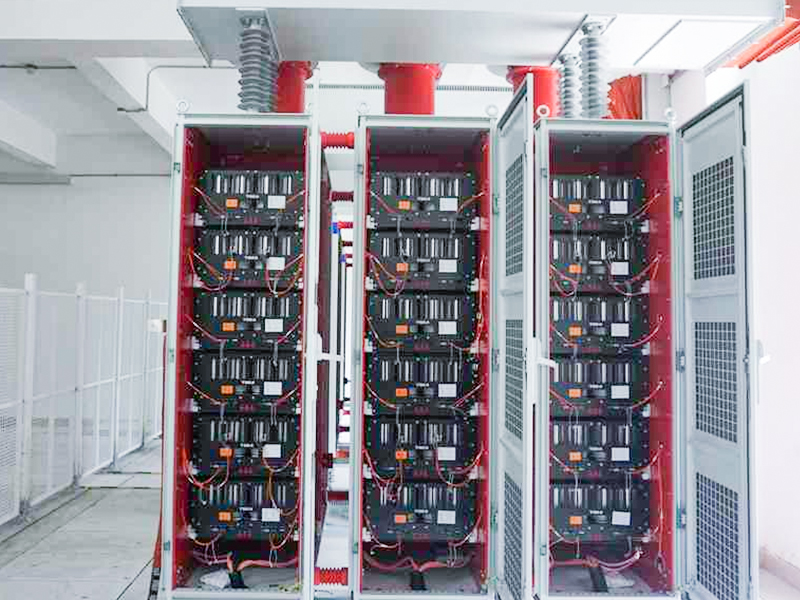
A Water Cooled Statcom requires precise fluid management. Start your daily routine by checking coolant levels. Look directly at the expansion tank sight glass. Verify the fluid sits between the minimum and maximum marks. Next, monitor the system pressure. Small pressure drops often indicate micro-leaks. Catching these leaks early prevents major flooding events.
Conductivity monitoring prevents catastrophic short circuits. The system uses deionized water or a specialized water-glycol mixture. This fluid must remain strictly non-conductive. Built-in sensors measure conductivity continuously. You must check the sensor readings on the HMI daily. If conductivity rises, the ion exchange resin needs replacement. Never ignore a conductivity pre-alarm.
Pump and valve inspections verify active circulation. Audit both primary and redundant pumps. Listen for abnormal acoustic signatures like cavitation or grinding. Inspect the mechanical seals for moisture. A weeping seal precedes a total blowout. Ensure all manual valves sit in their correct operating positions. A partially closed valve starves the system of coolant.
Finally, verify the heat exchanger status. The secondary cooling loop dissipates heat to the outside air. Check the dry coolers or cooling towers. Ensure fans spin freely. Look for debris blocking the external coils. The internal loop fails if the external loop cannot reject heat.
Inspection Area | Target Parameter | Daily Action Required |
|---|---|---|
Expansion Tank | Fluid Level | Confirm level is above the minimum line. |
Main Piping | System Pressure | Log gauge pressure; check for micro-leaks. |
HMI Panel | Conductivity (µS/cm) | Verify value remains below alarm threshold. |
Pump Assembly | Seal Integrity | Inspect visually for fluid drips or crusting. |
High-stakes failures demand immediate, rehearsed responses. Air-cooled systems often develop localized hotspots. If a primary fan array registers a fault, do not panic. The system rarely triggers a full trip immediately. You must open the HMI and identify the exact faulty zone. Monitor the adjacent module temperatures. Schedule a controlled fan replacement during the next low-load period.
Water-cooled risks escalate much faster. Sudden pressure drops require an immediate response workflow. First, check for visible spray or flooding. Isolate the leaking section using manual bypass valves. If a conductivity alarm triggers, the system faces contamination. You must isolate the affected loop. The automated shutdown procedures protect the grid, but your rapid intervention minimizes damage.
Redundancy management requires careful daily execution. You should safely switch active cooling loads between primary and backup pumps. This ensures balanced wear-and-tear across all moving parts. Perform this switchover during routine daily operations. Do not wait for a pump to fail before testing the backup. Verify the standby pump spins up smoothly without pressure spikes.
Safety compliance dictates every physical action you take. Electrical proximity presents severe hazards. Always enforce strict lockout/tagout (LOTO) protocols. Never bypass safety interlocks to inspect a spinning fan. Wear appropriate arc flash personal protective equipment (PPE). Liquid leaks near high voltage require extreme caution. Always assume spilled coolant conducts electricity until proven otherwise.
Risk Mitigation Action Chart | ||
Risk Scenario | Cooling Type | Immediate Workflow |
|---|---|---|
Localized Hotspot | Air Cooled | Check HMI module data; inspect corresponding fan group. |
Sudden Pressure Drop | Water Cooled | Initiate visual leak sweep; prep isolation valves. |
High Conductivity Alarm | Water Cooled | Check resin filter status; prepare for controlled shutdown. |
Filter Pressure Differential | Air Cooled | Schedule immediate filter replacement during low load. |
Procurement teams must align their cooling choices with actual site capabilities. You need a realistic assessment of your existing maintenance workforce. Evaluate their daily skill sets. Do they possess deep plumbing and chemical handling expertise? If so, liquid systems make sense. If your team consists entirely of HVAC technicians, an air-based approach proves far safer. Mismatched skills lead to poor daily maintenance.
Environmental constraints dictate technical boundaries. Geographical realities heavily influence system selection. Sub-zero temperatures freeze pure water. You must use glycol mixtures in these regions. Glycol changes the fluid dynamics and requires different pump seals. Conversely, arid and dusty environments destroy filters rapidly. Desert locations strain air intake systems heavily. You must factor these environmental realities into your daily operational plans.
Shortlisting logic requires a clear decision matrix. You finalize the right cooled STATCOM based on grid requirements and daily maintenance tolerance. Review your available floor space. Liquid units offer higher power density in smaller footprints. Air units demand more space for airflow clearance. Discuss these trade-offs with your engineering teams. Make your final choice based on what your team can confidently maintain every single day.
Capability Decision Matrix Chart | ||
Site Reality | Recommended Cooling Architecture | Daily Maintenance Impact |
|---|---|---|
High Dust / Desert Environment | Liquid System (Closed Loop) | Eliminates massive filter replacement tasks. |
Limited Plumbing Workforce | Air System | Focuses checks entirely on fans and HVAC. |
Compact Installation Space | Liquid System | Requires daily leak checks in tight corridors. |
Moderate Climate / Clean Air | Air System | Minimal daily intervention required; highly stable. |
Daily maintenance forms the absolute bedrock of system reliability. This truth holds firm regardless of the cooling medium you deploy. You must execute visual audits, data logging, and physical checks relentlessly. These small daily actions prevent catastrophic grid failures. They keep junction temperatures safe and protect delicate silicon components.
We encourage you to empower your operators fully. Integrate these daily manual checks directly with your automated SCADA system alerts. This creates a powerful hybrid defense against downtime. Sensors catch micro-fluctuations, while human eyes catch physical wear. Together, they form an impenetrable maintenance barrier.
Take action today. Request a detailed, vendor-specific maintenance manual from your manufacturer. Schedule a comprehensive site capability audit immediately. Consult with your internal engineering teams to finalize your procurement decisions. Proper planning ensures your cooling architecture serves your grid reliably for decades.
A: Daily inspections are mandatory, but replacement intervals depend entirely on your site environment. Dusty locations may require monthly changes. Clean environments allow filters to last a year. You must base your replacement schedule strictly on the pressure differential readings from your sensors.
A: Modern Tier-1 systems trigger automated shutdown procedures immediately upon detecting significant pressure drops. Conductivity alarms activate if the fluid contacts internal components. The system isolates the leaking loop automatically to protect the power electronics from arc flashes and catastrophic electrical failure.
A: Redundancy is highly recommended, though technically optional in basic setups. It eliminates single points of failure. N+1 configurations allow you to perform routine daily maintenance and swap pumps without causing expensive system downtime or dropping the grid load.
A: No. While HMI and SCADA systems handle continuous data logging excellently, they cannot replace human senses. Daily visual and acoustic inspections remain essential. You need operators to verify sensor accuracy, spot minor fluid drips, and catch early mechanical wear before sensors trigger alarms.


